ENDOCANNABINOID SYSTEM
Most people have never heard of the endocannabinoid system. Yet it plays a central role in maintaining balance across many physiological processes in the body.
The ECS was identified in the 1990s while researchers were investigating how cannabis works in the body. In doing so, they discovered a naturally occurring regulatory system made up of receptors, signalling molecules and enzymes [1]. This system is now recognised as a key contributor to homeostasis — the body’s ability to maintain internal stability despite external change [1]. Importantly, the ECS is not something cannabis creates. Rather, cannabis interacts with a system that already exists within us [2].
What Is the Endocannabinoid System?
The ECS can be understood as a regulatory network. Its role is not to force systems into action, but to fine-tune activity when something becomes overactive or underactive.
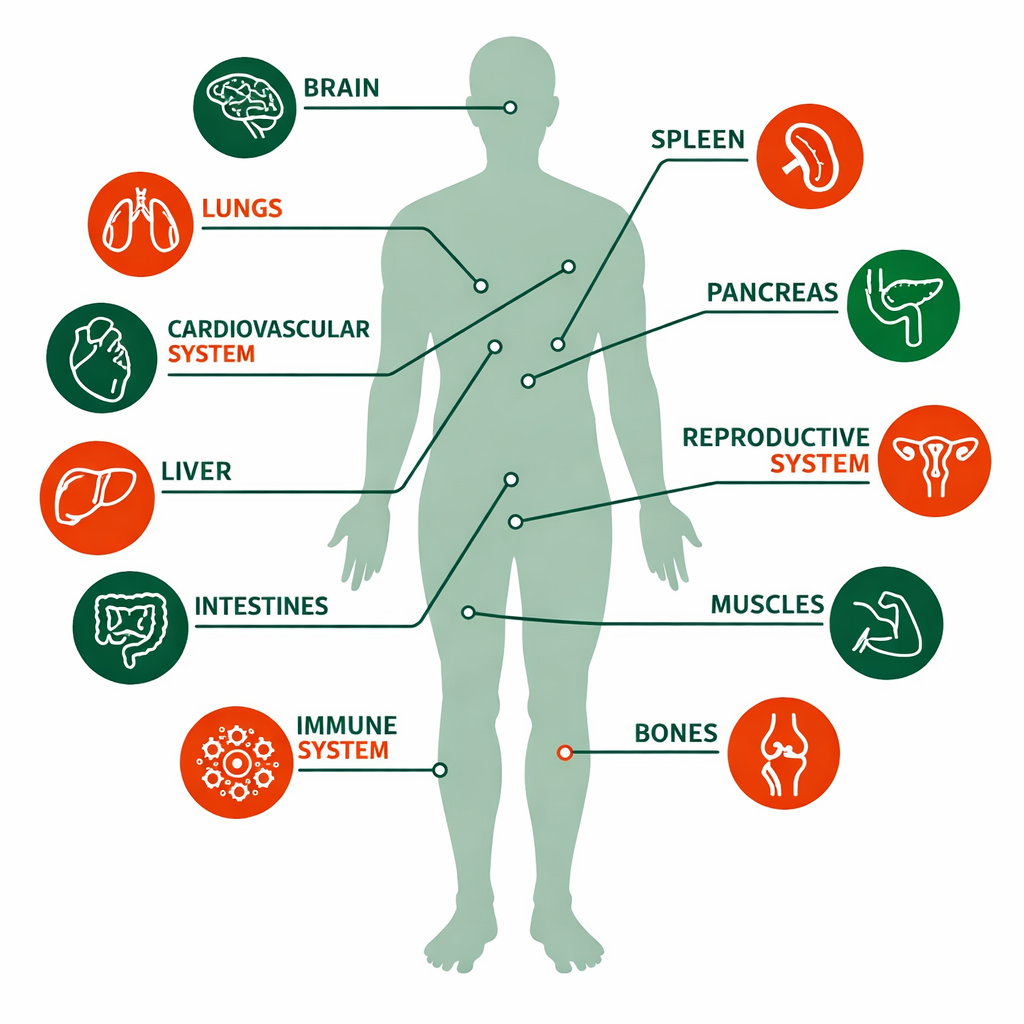
Research shows the ECS influences [1,3]:
- Mood
- Sleep
- Appetite
- Pain Processing
- Immune Function
- Stress Response
- Memory and Learning
How Does the Endocannabinoid System Work?
The ECS has three core components that help the body maintain physiological balance. [1]:
1
Endocannabinoids
These are signalling molecules produced naturally in the body. The two most studied are anandamide (AEA) and 2-arachidonoylglycerol (2-AG). They are synthesised “on demand” and broken down quickly once they have done their job [1].
2
Cannabinoid Receptors
These receptors sit on cell surfaces and receive signals from endocannabinoids.
• CB1 receptors are found predominantly in the brain and central nervous system
• CB2 receptors are more common in immune and peripheral tissues [3]
3
Enzymes
Specific enzymes break down endocannabinoids after they have completed their signalling role, ensuring that their effects are short-lived and precisely controlled. This rapid breakdown maintains tight regulatory balance [1].
Endocannabinoid Tone and Dysregulation
The term endocannabinoid tone refers to the overall activity and balance of the ECS at a given time.
A hypothesis known as Clinical Endocannabinoid Deficiency (CECD) suggests that reduced endocannabinoid signalling may be associated with certain chronic conditions, including migraine, fibromyalgia and irritable bowel syndrome [4]. However, this remains an evolving area of research rather than a formally established diagnosis.
Lifestyle and the Endocannabinoid System
Emerging evidence suggests that lifestyle factors influence ECS signalling.
Diet
Endocannabinoids are lipid-derived molecules, meaning they are synthesised from dietary fats. Omega-3 fatty acids appear to support healthy ECS signalling, while imbalance in fatty acid intake may influence inflammatory pathways connected to ECS activity [2].
Certain plant compounds, such as β-caryophyllene (found in black pepper and herbs), interact directly with CB2 receptors [2].
Exercise
Moderate aerobic exercise has been shown to increase circulating anandamide levels, which may contribute to improved mood and stress resilience [1]. This is one mechanism thought to contribute to the so-called “runner’s high”.
Stress
Chronic stress has been shown to reduce anandamide levels and alter ECS signalling [5]. Research indicates that modulation of the ECS plays a role in stress response and anxiety regulation, particularly stress-induced anxiety [5].
Sleep
The ECS contributes to sleep–wake regulation and interacts with circadian rhythms [1][3]. Disrupted sleep patterns can affect ECS balance, and ECS signalling in turn influences sleep stability.
Social Connection
Research suggests that endocannabinoid signalling contributes to social bonding and affective touch processing in humans [6]. Anandamide activity has been linked to emotional regulation and social reward pathways.
How Does Cannabis Interact with the Endocannabinoid System?
Cannabis contains over 100 cannabinoids. The most widely studied are:
• THC (tetrahydrocannabinol)
• CBD (cannabidiol)
THC binds directly to CB1 receptors in the brain, producing both psychoactive and therapeutic effects depending on dose and context [3]. CBD does not bind strongly to CB1 receptors but modulates ECS signalling indirectly through multiple pathways [2]. In the UK, certain cannabis-based products for medicinal use (CBPMs) may be prescribed under specialist supervision within regulated frameworks. Everyone’s ECS is unique. Genetics, diet, stress exposure, hormones, age and overall health all influence ECS tone and responsiveness.
Conclusion
The endocannabinoid system is a central regulatory network supporting balance across mood, sleep, immune function, stress response and pain modulation. Cannabis does not create this system — it interacts with it. Understanding the ECS helps explain why cannabinoids may influence a wide range of symptoms, and why responses differ between individuals. Educational content only. This information does not replace personalised medical advice.
References
[1] Lu HC, Mackie K. An introduction to the endogenous cannabinoid system. Biological Psychiatry. 2016;79(7):516–525.
[2] Di Marzo V, Piscitelli F. The endocannabinoid system and its modulation by phytocannabinoids. Neurotherapeutics. 2015;12(4):692–698.
[3] Zou S, Kumar U. Cannabinoid receptors and the endocannabinoid system: Signaling and function. International Journal of Molecular Sciences. 2018;19(3):833.
[4] Russo EB. Clinical endocannabinoid deficiency reconsidered. Cannabis and Cannabinoid Research. 2016;1(1):154–165.
[5] Anxiety modulation by cannabinoids — the role of stress responses and coping. Frontiers in Pharmacology.
[6] Endocannabinoid contributions to the perception of socially relevant affective touch in humans. Neuropsychopharmacology.