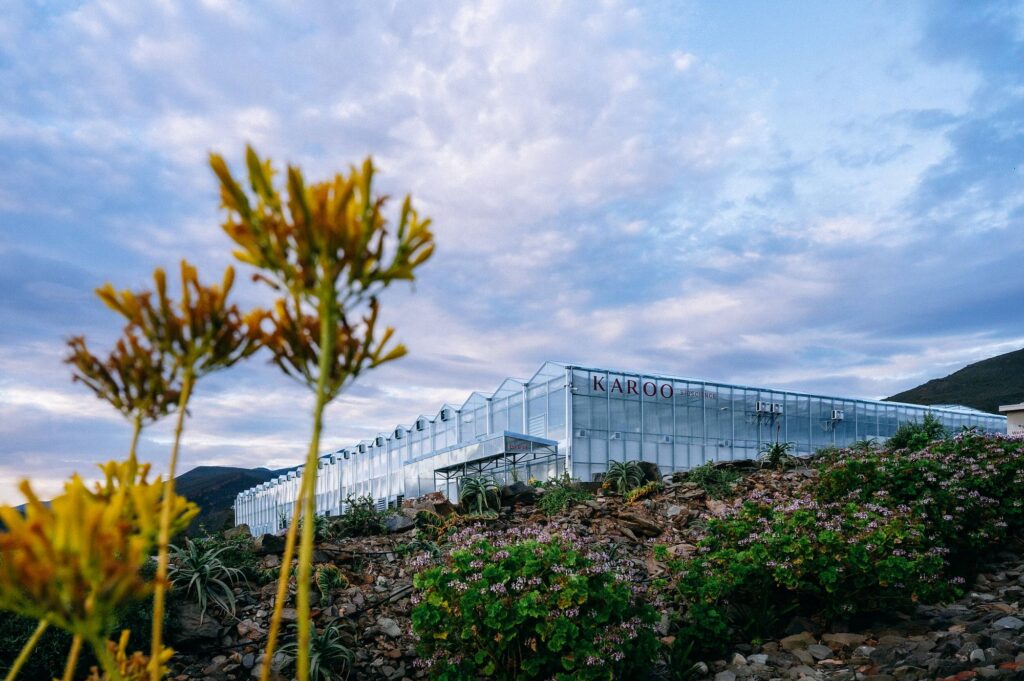
Growing medicinal cannabis is like growing any other plant. It takes care, attention and understanding of the precise conditions the plant needs to flourish.
To appreciate the full process of producing medical-grade cannabis, we spoke to Anton Huysamer, Cultivation Manager, or Master Grower, at Karoo Bioscience. In this interview, Anton shares with us his journey with the facility. He explains how they select cannabis plants for optimal growth and why maintaining a sterile facility is necessary for growing.
Interestingly, Anton didn’t begin his career in agriculture. “My background is actually in entomology, I’m a bug guy,” he tells us. “There’s a very cool overlap between insects and agriculture, and that’s how I fell into the agricultural space.”
A medicinal cannabis spaceship in the Klein Karoo
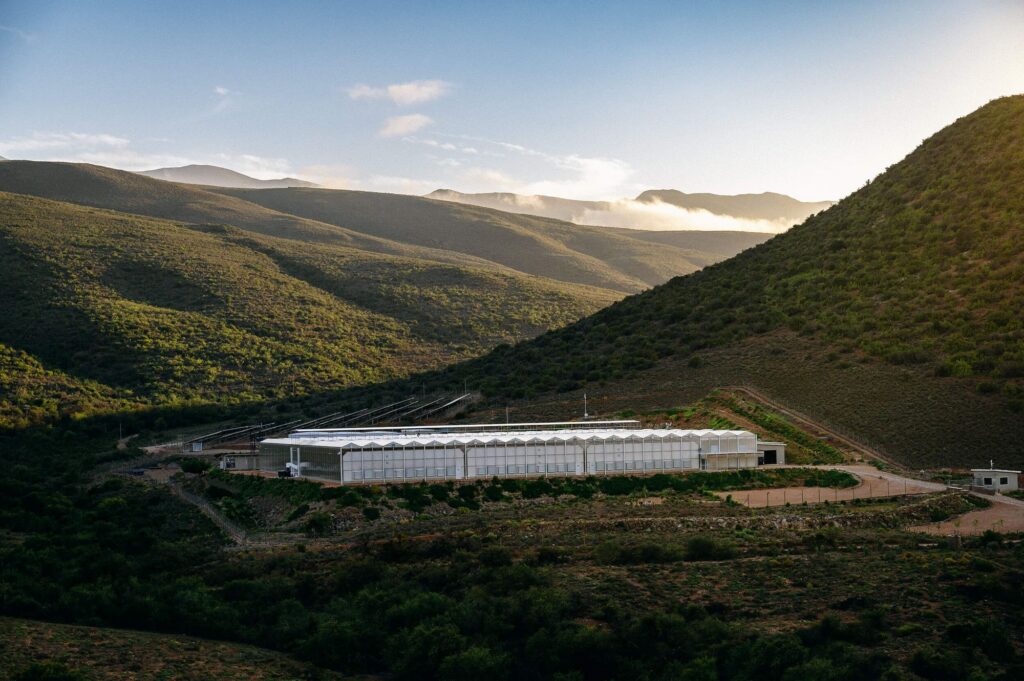
“I’ve been with the company for just over five years,” Anton explains. “When we joined in 2020, there was no facility. It was just a massive dirt platform. We were there from the build-out, through the licensing process, and right to the beginning of production. It’s been an incredibly fruitful five years, and I’ve learned so much.”
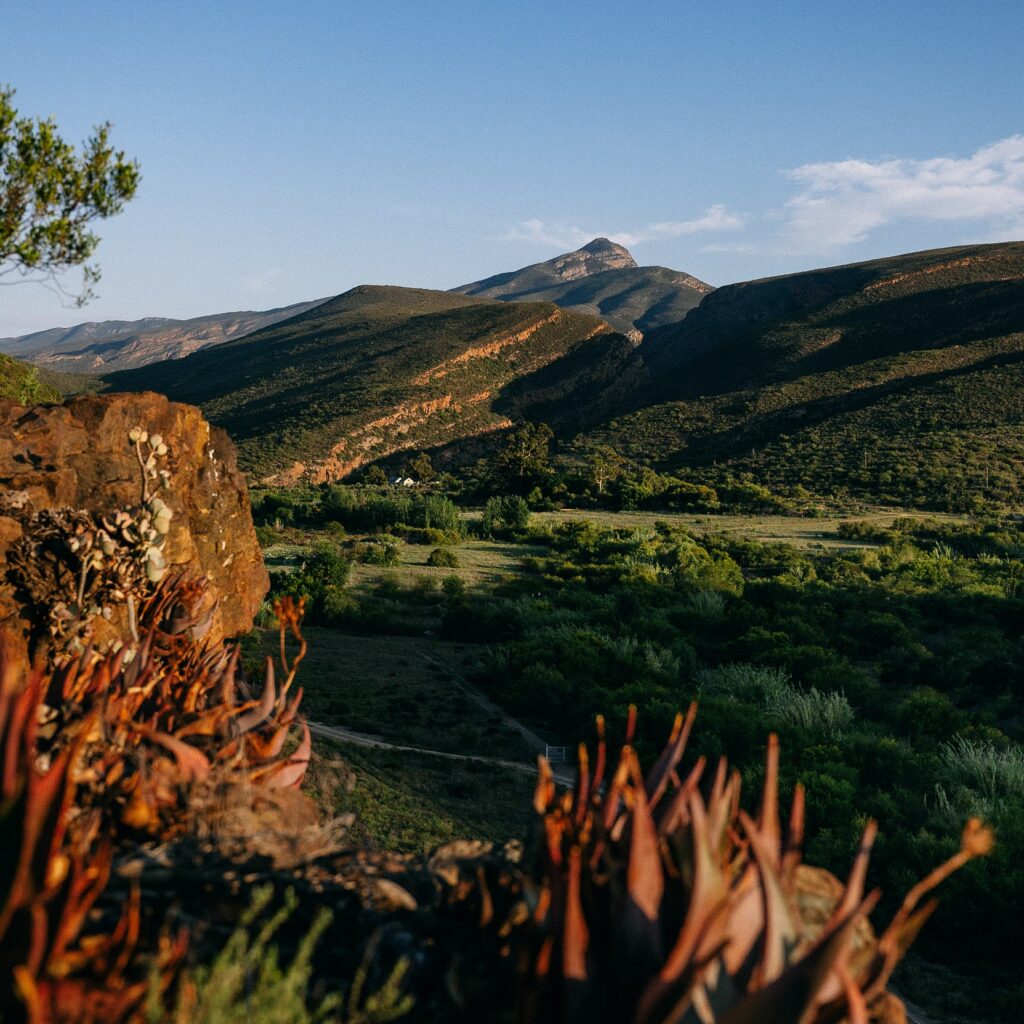
Karoo Bioscience’s facility is located in an incredibly rural part of the Western Cape, in the Klein Karoo region of South Africa. Anton describes the landscape as “a little bit like Mars, but absolutely beautiful and a breathtaking location.” It’s situated 40 kilometres from the nearest tar road, with no petrol station or bank nearby. This makes for, as Anton puts it, “the perfect location for a massive spaceship in which we can grow medicinal cannabis.”
The 6,600-square-metre facility consists largely of greenhouse space, where flowering crops grow using a combination of natural sunlight and artificial lighting. There is also a dedicated indoor nursery used for propagation and the early vegetative phase.
Selecting resilient plants
Karoo Bioscience is a large-scale medical cannabis producer with a rigorous production schedule. Anton explains that they stagger their production to ensure their flowering room is only empty for five days between cycles. This allows for deep sanitation, thorough cleaning, and flushing of irrigation lines. This is especially critical during the intense summer months.
When we spoke to Anton, the temperature was 36°C, which was “standard for January,” he noted, with peaks often reaching into the 40s. This means, when selecting genetics, “it’s almost entirely based on how well a crop performs” in their location, Anton explains.
He continues, “Whether we hunt from seed or bring genetics in from other suppliers, we run small-scale trials first to make sure the plant can handle the environment and our production schedule.” This highlights the meticulous testing Karoo Bioscience undertakes.
Once plants complete their flowering cycle, the team harvests an entire room in a single day — a milestone Anton once thought impossible. “If you’d asked me four years ago, I would have said it was physically impossible,” he says. “But we’ve been doing it consistently every two weeks for the past two years,” Anton shares.
After harvest, the plants move to the Good Manufacturing Practises (GMP) portion of the facility. In this part of the process, they undergo an extremely stringent two-phase drying process: an initial dry followed by a longer, gradual second phase. Then comes a slow and controlled curing process in the same carefully monitored environment.
When the flowers reach their ideal moisture content, they move to the trimming room. The vast majority of crops are trimmed by hand to preserve quality.
Once trimmed, the product is packaged, sent for Certificates of Analysis (COAs), and then distributed to the purchaser.
A clean and controlled medical cannabis facility

It’s not just about keeping a pristine facility; it’s also about risk assessment and mitigation.
Anton highlights, “When someone steps in from outside, entering in their civilian clothes and walks through your pristine facility, it’s a huge risk.
“They could have been frolicking in a compost pile, or they could have just come from their own grow, bringing pests and diseases with them, on their clothes or shoes.
“It’s paramount to make sure that you reduce that risk by ensuring that people can’t just walk into your facility.”
Access to Karoo Bioscience is controlled through bands that open doors for employees to move through. If you don’t have the right access, you can’t enter that space.
If you have the authority to enter the space, there’s a process of putting on a hair and bread net before stepping into an air shower. This isolates the changing area from the rest of the indoor facility, ensuring the plants don’t get contaminated.
Sun-powered medicinal cannabis
We asked Anton what the pros and cons are of growing medical cannabis in South Africa and exporting it to Europe or the rest of the world.
The number one benefit he listed was the climate. “We can produce year-round as we generally have a Mediterranean climate on the West Coast and a more subtropical environment on the East Coast. All of this allows for year-round production. This means we can produce a substantial amount of medicinal cannabis throughout the growing year,” Anton notes.
He continues, “Compared to places in the Northern Hemisphere, like Canada, it’s hard to grow in the cold and dark periods of the year” (unless you’re the Aqualitas facility). As Anton explains, ‘It requires a massive amount of power input and huge infrastructure demands.”
Anton further explains that at Karoo Bioscience, 85% of their annual power usage is from the sun, which is enormous!
He goes on, “We can utilise the sunlight to our advantage. We have an incredible solar array outside which allows us to run all of these supplemental lights, all of the HVAC for GMP, all of the electricity across the whole of the site essentially for free.” So much so, that when it’s a really sunny day, like the one on which Anton spoke to us, there’s too much power generation, “we can’t even handle it all,” he shares.
A company culture that fosters community
At the heart of Karoo Bioscience is a workforce of 110 people, the majority of whom call the small town of Von Weggsdorf home.
Situated just 10 kilometres from the facility, Von Weggsdorf’s proximity creates a seamless link between the company’s goals and the town’s local economy. This fosters a sense of community.
When Anton describes the team as “one big family,” he isn’t just leaning on a corporate cliché — he’s talking about the literal reality of their payroll.
In a rural setting where the talent pool is selected from a town of a thousand people, the lines between professional and personal life naturally blur. Anton notes that this environment brings a distinct energy to the facility. “When you have that many family members working together, there’s inevitably a unique dynamic,” Anton continues. It reinforces the idea that the success of Karoo Bioscience is, quite literally, the community’s success.
Furthermore, hiring locally in a remote area, such as the Klein Karoo, means Klein Bioscience not only provides jobs, but it also supports the region’s social fabric. And this not only creates community, but it sustains it.
If you’d like to find out more about Karoo Bioscience, head over to the Podcast Episode – Growing Cannabis on Mars – Inside Karoo Bioscience’s Greenhouse with Wellford Co-founder Joshua Roberts.